|
TEA TREE
AND TEA TREE OIL DEVELOPMENT AND COMMERCIALIZATION
Tea tree farming and tea tree oil extraction and product development is
a major AgrifoodAsia project in China.
This project is being developed in partnership with the Agriculture
Technology Park in Fuzhou, Fujian, China.
BACKGROUND
Tea tree farming and
tea tree oil development originated from Australia.
Australian tea tree
oil is mostly grown and extracted from Melaleuca alternifolia and
marketed as 100% pure tea tree oil.
Melaleuca genus is a
member of the myrtle family of over 300 species of shrubs and trees
native to Australia. In Australia, Melaleucas are also known as
paperbarks and honey myrtles
Tea tree plantations
are expensive to establish, with costs including trees, harvest
equipment and distillation equipment and is regarded as long-term
investments

Australia is the
current the world leader tea tree oil production, marketing,
value-adding, safety standards and product reliability.
Australian tea tree
oil composition must strictly adhere to international standard
ISO4730:2017 and the identical Australian standard AS 2782-2009.
Most Australian tea
tree oil is marketed under the Australian Tea Tree Industry Association
Code of Practice accredited brand and logo to guarantee standard and
quality.
Major Australian tea
tree farming regions are northern NSW and Queensland where the trees are
native and adapted to local conditions.
Average tea tree oil
yield in Australia – 250 -500 kg/ha but varies with variety, region and
farming techniques. Extraction residue is used as mulch.
Cultivation: In 2024,
Australia had over 5,000 hectares under commercial tea tree cultivation.
Production Volume:
The annual production volume exceeded 1,000 tonnes.
Market Share:
Australia produces more than 80% of the world's tea tree oil supply.
Exports: ~90% of
Australian tea tree oil is exported – major export destinations: USA
54%, Europe 30%, Asia 14%. The potential market is substantial.
The main competition
in the international tea tree oil market comes from China where it has
the advantage of cheaper production costs.
However, Australian
tea tree oil competes effectively by producing high quality, consistent
product that is compliant with international standards and through
higher yielding varieties and superior technology in the supply chain
from farming to consumer
|
BACKGROUND
In Australia,
Tea oil is mostly extracted from tree twigs and leaves using
steam distillation.
|
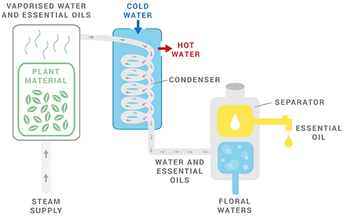
Higher
quality and purer tea oil can be extracted using supercritical
CO2 technology.

|
|
KEY PROPERTIES
OF TEA TREE OIL
-
Anti-microbial – particularly
against antibiotic resistant microorganisms such as S.
Aureus in hospitals
-
Anti–fungal and Anti-virus –
flu and cold – anti cancer
-
Broad spectrum antiseptic,
insecticide and insect repellent
-
Anti-inflammatory, wound care
and healing – such as acne, eczema, insect bites, burns and
gingivitis
|
|
KEY INDUSTRIAL
AND POTENTIAL APPLICATIONS
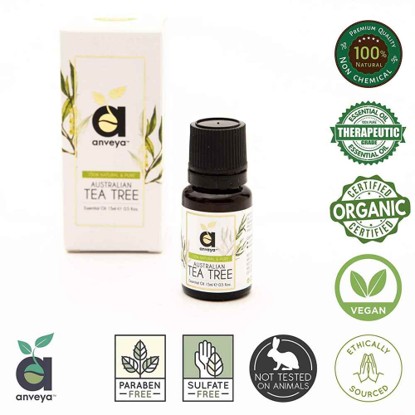
Tea tree oil can have allergen and
irritant effects caused by high levels of Cineol in the oil.
Therefore, the selection of tea tree varieties and proper
farming methods are essential in ensuring Cineol concentration
in the oil does not exceed industry standards.
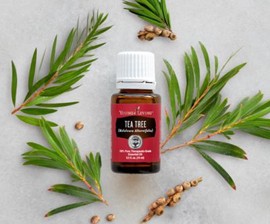
Human clinical trials show - tea tree oil is efficacious in:
-
Clearance
of MRSA
-
Reduction
of bacterial load
-
Reduction
of yeast and fungal infections
-
Treatment
of mild to moderate acne vulgaris
-
Treatment
of tinea pedis
-
Treatment
onychomycosis
-
Treatment
of furunculosis (boils)
-
Treatment
of viral infections including Herpes labialis (cold sores)
-
Treatment
of mild to moderate dandruff
-
Prevention of head lice
-
Relief of
the symptoms associated with contact hypersensitivity
reactions
-
Relief of
the symptoms of moderate to severe gingivitis
-
Relief of
the symptoms of fluconazole-refractory oropharyngeal
candidiasis
-
Relief of
the symptoms of denture stomatitis
-
Treatment
of Ocular Demodex
TEA TREE
FARMING TECHNOLOGY
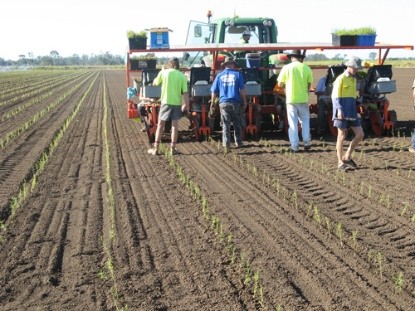
Australian
tea tree farming is broadacre and highly mechanized.
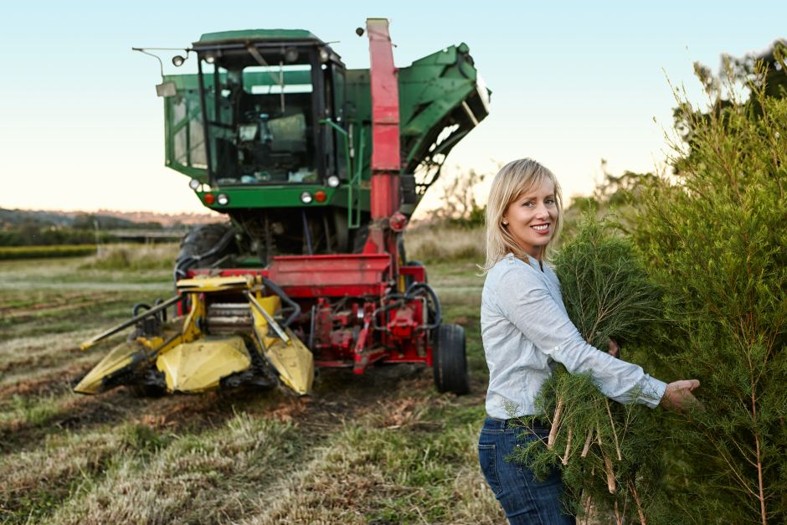
Tea Tree
propagation
-
Seeds
should be collected from selected tea trees with superior
performance – fast strong healthy growth
-
Seeds
need to be harvested at optimum maturity – vary with variety
-
Seeds are
very small and must be kept dry during handling and storage
-
In
Australia, quality tea tree seeds for commercial farming are
obtained from large commercial growers or Australia Tea Tree
Center. Most tea tree seeds sold by nurseries are collected
from wild tea trees that are not suitable for commercial tea
tree farming as tea tree oil and terpenes yields are poor
-
Australian tea trees prefer subtropical climate and are
self-pollinating
-
Tea trees
do not require a lot of watering but regular watering is
essential for superior tea tree growth and yield of oil and
terpenes
-
Soil with
good drainage and a pH of near neutral is preferred for
commercial farming of tea trees for tea tree oil
-
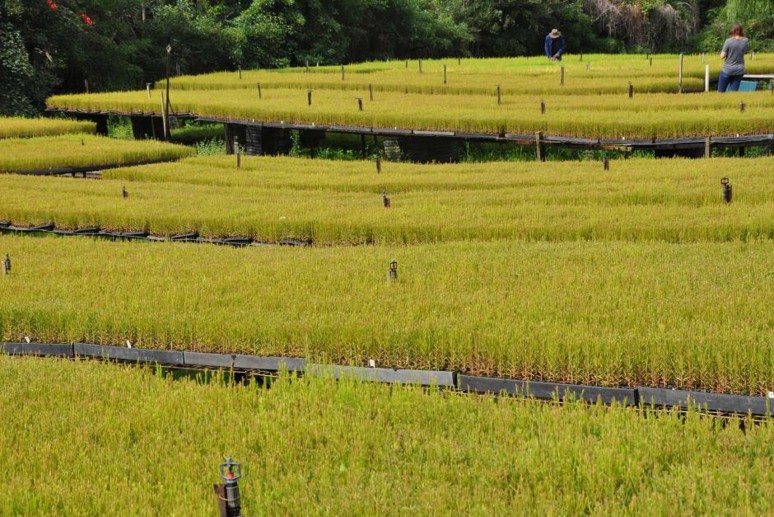
Tea tree
seeds should be sown into good quality compost [coconut
substrate] in the nursery to a depth around 0.5 cm and kept
in moist but not wet condition at a temperature between
8-15C
|
|